What Are CDJs, and Why Would Someone Use 16 of Them?
CDJs are digital music players designed for DJing. They let a DJ load and play tracks from USB drives or other supported sources, then shape a performance with controls for tempo, cue points, looping, hot cues and effects. The name is strongly associated with Pioneer DJ’s CDJ range, although modern CDJs commonly play digital files rather than requiring a compact disc.
So why would anyone use 16 of them? In a regular club booth, they probably wouldn’t. A pair of players and a mixer is enough for many sets, and four players are a familiar expanded setup. Sixteen CDJs is usually a special-purpose installation, an elaborate performance rig, or an eye-catching piece of festival production—not the default equipment list for a night out.
Understanding the difference between a practical DJ setup and a deliberately oversized one helps answer both parts of the question: what are CDJs, and what could a performer possibly do with 16? It also offers a useful lens for reading fast-moving EDM news, where a dramatic stage photo can travel farther than the full explanation of what is actually happening.
What are CDJs?
A CDJ is a standalone player built for selecting, cueing and mixing music. A DJ can connect a USB drive, browse its tracks, load a song, and use the player’s jog wheel and performance controls to work with it. Depending on the model and connected equipment, CDJs may also link with other players, mixers or library-management tools.
In a conventional club booth, the CDJ is one part of a larger system. The player sends audio to a mixer, where the DJ balances channels, adjusts EQ, applies effects and blends one track into another. Headphones help the DJ preview a track before the audience hears it. Speakers and monitors make the music audible in the room and at the booth.
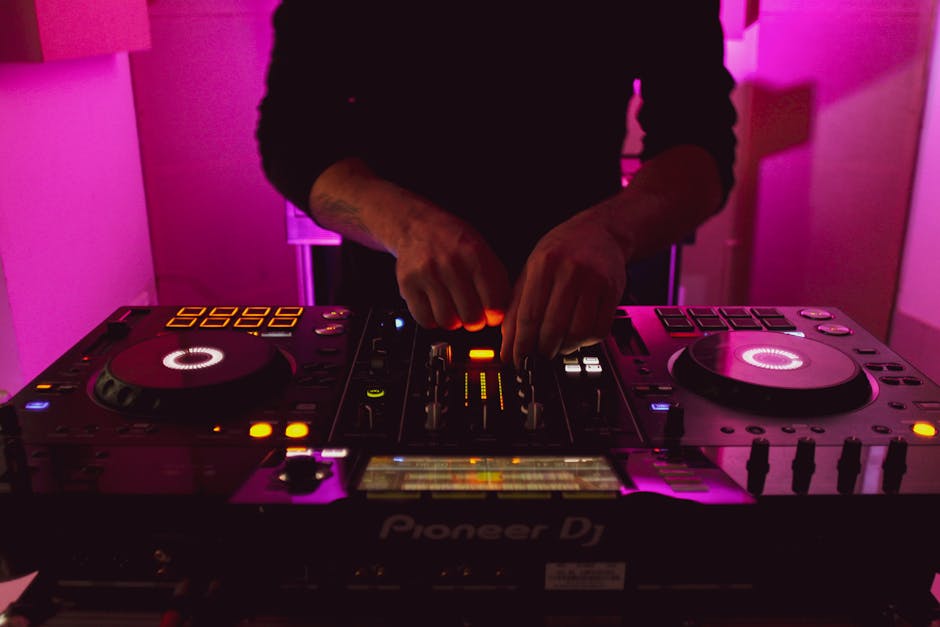
A DJ setup explained
- Players: CDJs or other decks load and play tracks.
- Mixer: The mixer combines the audio channels and provides level, EQ and other performance controls.
- Music library: USB drives, supported media or linked devices provide the tracks.
- Headphones: The DJ previews and prepares music privately before bringing it into the mix.
- Sound system: Booth monitors and the venue’s main system deliver the performance to the DJ and crowd.
The phrase pioneer dj cdj often appears in searches because Pioneer DJ players are common in professional booths and have become a familiar reference point for club-standard equipment. But the basic idea is broader: a CDJ is a player built to give a DJ hands-on control over digital music in a live setting.
Why use more than two CDJs?
Two players cover the central task of mixing one track into another. Adding more players gives a DJ extra sources to prepare, layer or switch between without stopping to unload a deck. For instance, a performer might have one track playing, another ready to mix in, a third loaded with a vocal or percussion part, and a fourth prepared for a transition.
More players can support flexible, technically demanding sets. A DJ working with several collaborators may want each performer to have a dedicated player. A long set may benefit from additional sources that are ready to go. A performance combining prerecorded tracks with live instruments, drum machines or other hardware can also use extra channels and players.
But extra CDJs do not automatically make a set better. Each player needs space, audio connections and a clear role in the workflow. More equipment can mean more setup time, more opportunities for technical problems and a greater need to coordinate who is using what. A well-chosen two- or four-player rig can be more effective than a large one that serves no musical purpose.
Why would someone use 16 CDJs?
Sixteen players are a different proposition. That number is unlikely to describe a normal club booth; it points instead to an installation or a performance concept. There are a few plausible reasons to build one:
- A multi-performer showcase: A large stage may host several DJs or live acts, with equipment arranged to let performers trade places or contribute at the same time.
- A visual centerpiece: A wall, tower or grid of CDJs can turn familiar gear into stage design. The sheer quantity signals scale, even before a note plays.
- An experimental performance: An artist may use multiple sources for layered playback, coordinated loops or a composition that moves between many prepared tracks.
- A brand or product presentation: An event may display equipment as part of a demonstration, launch or promotional installation.
- A record-breaking or novelty concept: Sometimes the point is simply to pose the question, “What happens if we use this many?”—and make the answer compelling on camera.
There is an important distinction between having 16 CDJs onstage and using all 16 as active instruments. Some units might be part of a visual arrangement, backups, or stations for different performers. A photo or short clip usually cannot tell you how the signal is routed, which players are live, or what the artist is doing with them. Good coverage should identify what is confirmed and avoid turning a striking image into an unsupported technical claim.
What changes in a 16-player setup?
The scale creates practical questions that do not come up in an ordinary booth. A production team has to plan table or stage space, power, audio routing, cable management, monitoring and the time needed for soundcheck. If performers are sharing the setup, the running order and handovers matter. The mixer and supporting equipment must also be chosen for the intended signal flow; a large stack of players is not useful if the system cannot accommodate them sensibly.
That is why a 16-CDJ rig is best understood as a production choice, not a standard recommendation for DJs. It may support an ambitious concept, but the concept should explain the equipment. The number alone is not proof of technical difficulty, musical innovation or a better audience experience.
From unusual DJ rigs to fast EDM news
Big equipment stories fit naturally into EDM news because they offer an immediate visual hook. They also move quickly: an artist posts a photo, a festival account shares it, https://dlf-ne.org/halloween-weekend-edm-plans-how-do-you-pick-between-festivals-and-clubs/ and music pages race to publish an update. For readers, speed is useful only when the essentials—artist, event, date, location and what has actually been announced—are right.
EDM House Network can cover that kind of story alongside the daily flow of scene updates: surprise appearances, new stage concepts, schedule changes, new releases and festival announcements. Fast updates are valuable, but they should distinguish confirmed information from speculation. If a post says an artist is using 16 CDJs, a careful report should explain whether the equipment is confirmed as part of the performance or merely visible in promotional material.
Weekly new-music roundups offer another reliable format. A feature such as New EDM Friday can give readers a regular place to catch new singles, remixes and albums without treating every release as a standalone breaking-news item. Editors can add context, identify the artists and labels, and help listeners find the tracks on services such as Spotify.
Making a Spotify playlist useful
A Spotify playlist embed can sit alongside the written roundup so readers can listen without leaving the article. For example, a New Music Friday Spotify Playlist can collect the week’s selections in one player. The article still needs its own reporting and descriptions: an embed is a listening tool, not a substitute for explaining why a release belongs in the roundup.
Editors should also verify playlist titles, track availability and links before publishing. Music can be region-restricted, removed or replaced, and a playlist that was accurate last week may not represent this week’s picks. Clear dates help readers understand which edition of a recurring roundup they are viewing.
Festival phases, announcements and ticket timing
Festival information arrives in stages. An event may announce its dates first, release an initial lineup later, add names in a second phase, and publish schedules or stage assignments closer to the festival. Ticket sales may open before every artist is revealed. That creates real planning decisions for fans: whether to buy early, wait for more lineup detail, or arrange travel and accommodation around the dates already confirmed.
Useful coverage makes those stages explicit. A lineup article should say whether it is the first wave or a later update, state the announcement date, name the festival and location, and point readers to official ticket information. When ticket timing matters, spell out what is known—such as an announced presale or on-sale time—and what has not been confirmed. Never imply that a ticket window is imminent merely because a lineup rumor is circulating.
This approach applies to a story about 16 CDJs, too. If the equipment appears at a festival, readers need the event name, the performance date and venue details, plus a clear explanation of whether the rig belongs to one artist, a shared stage or a special installation. Accurate context turns an eye-catching post into genuinely useful event coverage.
How to structure a music page without confusing readers
Music sites often organize stories with WordPress-style category blocks and pagination. Category blocks can group content under labels such as News, New Music, Festivals or Reviews, helping readers move from a quick announcement to a deeper feature. Pagination can split a long roundup or archive across pages, but it should be implemented carefully so readers—and search engines—can find the complete article.
One common publishing mistake is treating a scraped page as if it contains the target article when it actually looks like a homepage or feed capture. A feed capture may show navigation, category cards, snippets from several posts, sidebar links and pagination controls rather than the specific article body. A scraper can therefore collect lots of text while missing the article’s actual headline, paragraphs or reporting.
Before writing or summarizing a scraped page, confirm that the content belongs to the intended URL. Check the page title, canonical URL, main article heading, author or publication details, and whether the body has a clear beginning and end. If the capture shows a stream of unrelated stories or repeated category blocks, it is likely a homepage/feed capture, not the target article. Do not describe the feed as though it were the article, and do not fill missing details with guesses.
Cookie notices can add another layer to what a page capture contains. A site may use a consent-management provider such as CookieDatabase (cookiedatabase.org) to explain or categorize cookies. A scraped page might include that notice, its buttons or related policy text alongside the visible content. Those elements are useful for understanding the page’s consent experience, but they are not part of the story itself. Separate interface and consent material from editorial copy before summarizing or republishing anything.
The short answer
CDJs are digital players that let DJs select and control tracks during a live set. A pair is enough for basic mixing; additional players can support extra layers, performers or more complex workflows. Sixteen is unusual and usually suggests a large-scale installation, a collaborative or experimental performance, a promotional display, or a visual concept. The real https://dlf-ne.org/mint-xl-leeds-opening-night-what-is-the-club-like/ question is not simply how many players are onstage, but what each one contributes.
That same standard—look beyond the headline and verify the details—serves readers across the EDM calendar. Whether the story is an unusual pioneer dj cdj setup, a New EDM Friday roundup, a festival lineup phase or a ticket announcement, accurate dates, locations and context matter. A good article explains the spectacle, links listeners to the music where appropriate, and makes clear what is confirmed rather than letting a feed capture or a dramatic image speak for itself.
